November 7, 2026
Presenting Barista Boom
Hello developers and players!
Welcome. My name is Matt. I was a software engineer for a while and two years ago I quit to try other things. One of those other things here is making games.
Today, I decided to present Barista Boom to the world! (or the 5-10 people who might see this on a lucky day). If you're just here to check it out, play it here first.
I've shown the game to a small handful of people to make sure the tutorial and game itself is legible, and used that feedback to take the game from an incredibly rough state to where it is today, which is hopefully stable and polished enough that anyone who decides to play at least isn't frustrated with what I'm presenting.
The most useful thing I am hoping to get from releasing a demo earlier (rather than waiting on Steam to clear their backlog) is some earnest feedback to catch any glaring weaknesses in the game so far.
To anyone still here, thank you for taking the time and I hope you enjoy playing!
For anyone else curious, I'll cover a bit of how I've been developing this game.
Development process
I've been working on this game since October 2nd and have poured roughly all of my waking hours into it since then.
My sole tool has been a terminal with claude-code. I don't use any external asset engines, any engines like Godot, or any big libraries like three.js. So the project itself is pretty minimal dependency. Everything you see in the game is JavaScript. So the sprites and animations and all of that were all translated from prompts into code and then hammered on through dozens of iterations. The music and sound effects are built up by parts - early on I set up the music so that you could tune in and out of channels as you wanted (e.g. you could turn off the "voice" layer of the song if you don't enjoy the a cappella style singing). The writing and stories in the game took (and are taking) quite a long time to smooth out. Claude is helpful for prototyping a storyboard to get a rough sketch of it, but fails to chisel the experience down correctly into what a player of this game would expect. That is a very hand-holding part of this process.
Getting here
I've built about 7 game prototypes with claude now since Opus 4.5 but none of them really got past an incredibly rough stage before I felt that the system was unsustainable or wouldn't make a good product. It was partially my inability to do anything in 3-D (my attempt to make "Crab Champions with more content because I played through the whole game and wanted more" got me to try learning Blender, which only taught me that I never wanted to make a 3-D model again). Even in 2-D, I just wasn't feeling like getting asset packs was the way I wanted to go. The free ones are just a bit overused. At the time though, claude's drawing capability was incredibly lacking.
Then Opus 5.5 dropped and for some reason, it could draw well in JavaScript. Maybe it could before, but now, creating a very basic prototype took a few prompts, and even getting a very rudimentary, playable core loop only took a few days. This first iteration of everything was very flat and basic. There are no shadows, and the trees are basically one shape, and the grass is... I mean, it's grass I guess?
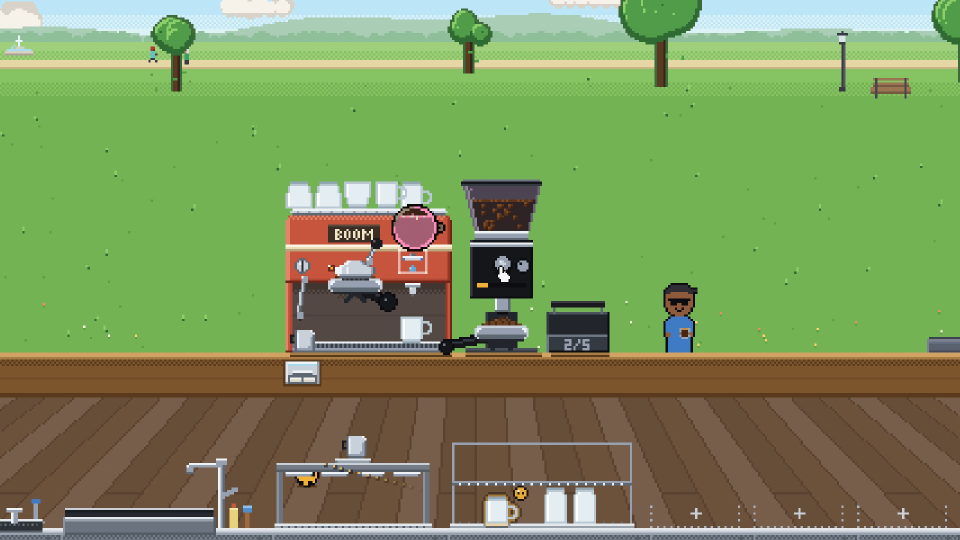
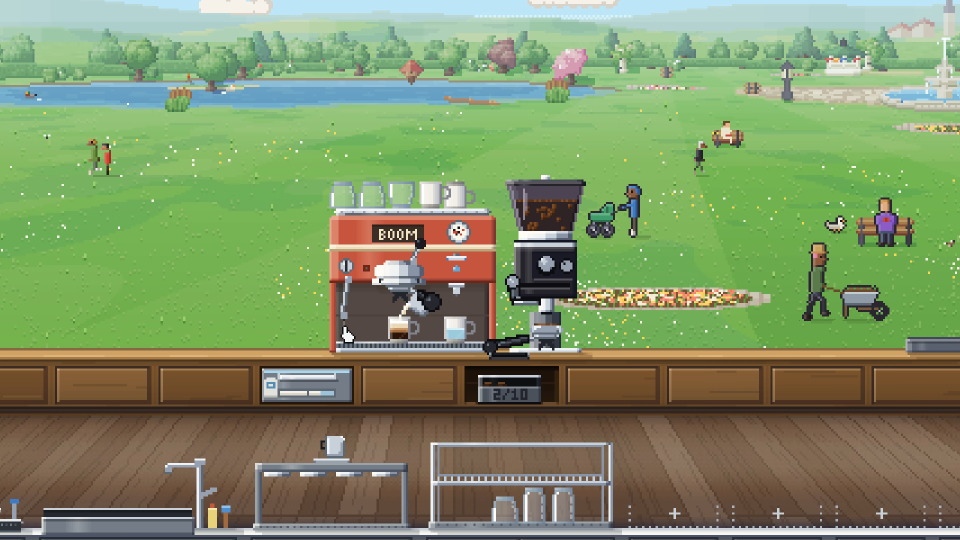
And compare it to now, about a month later. I just kept on pointing out places that felt flat, or lifeless, or boring, and over time it becomes something passable. Now, everything feels a lot more integrated into a world to me. I still see a lot of room for polish, especially in the sprites that walk around in the back, but in motion they look better than in a screenshot:
What else?
I have a running sheet of development notes that I tried to jot down along the way, and will make an effort to share my thoughts here for anyone who is interested in learning what developing a game with claude-code as the implementor is like.
Want new posts when they're up? Sign up below. It's its own list, separate from the game's announcements.